Snoring, Sleep Apnea, and Oral Appliances: A Dentist's Perspective
If you snore heavily, or your partner has nudged you awake more than once, it might be more than just noise. Snoring can sometimes be a sign of obstructive sleep apnea, a condition where breathing repeatedly stops and starts during sleep. Many patients in DLF Phase 4, Gurgaon come to us not for a toothache, but because they have heard that dentists can help with snoring. This article explains how that screening works and where oral appliances fit in.
Why a Dentist Gets Involved in Sleep Issues
Dentists are often the first healthcare providers to notice signs of sleep-disordered breathing. During a routine dental check-up, we look inside your mouth and throat far more closely than most people realise. Certain physical features, a large tongue, a narrow airway, a receding lower jaw, or worn front teeth from grinding, can point toward a higher risk of sleep apnea.
We are not able to diagnose sleep apnea ourselves. That requires a sleep study, either at a lab or at home, arranged through a physician or ENT specialist. What we can do is spot warning signs early, ask the right questions, and refer you for proper testing when needed.
Signs We Look For During a Dental Visit
- Scalloped edges on the tongue, often from pressing against teeth at night
- Visible wear or flattening on teeth from grinding (bruxism), which is linked to sleep apnea in some patients
- A narrow, high-arched palate or a small lower jaw
- Enlarged tonsils or a tongue that sits far back in the throat
- Reports of loud snoring, gasping during sleep, morning headaches, or daytime tiredness
If several of these are present, we will usually recommend a conversation with your doctor and, if appropriate, a home sleep apnea test or lab-based polysomnography.
Once Sleep Apnea Is Diagnosed, What Then?
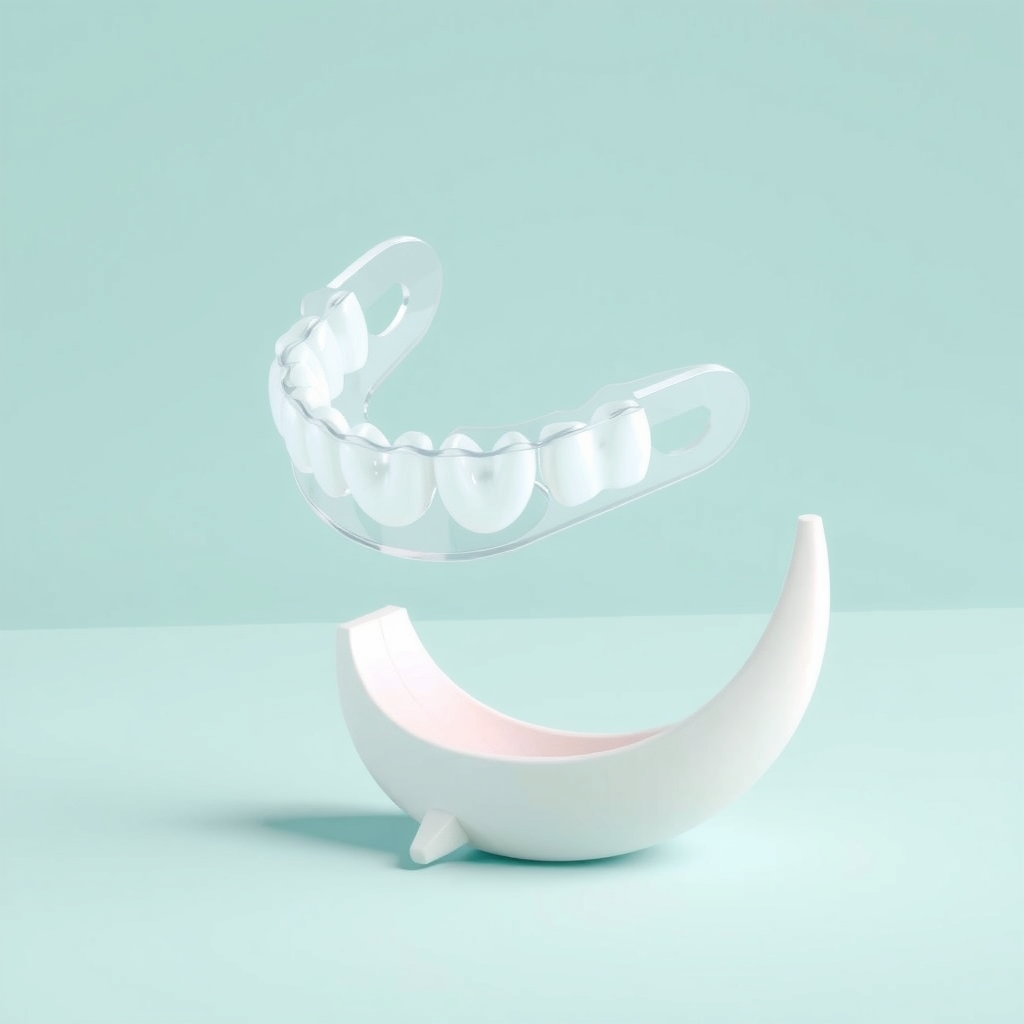
For patients diagnosed with mild-to-moderate obstructive sleep apnea, or for those who snore but do not have significant apnea, a custom oral appliance is a well-established option. These are not the same as the generic mouthguards sold in pharmacies.
How Oral Appliances Work
A custom oral appliance is a device worn in the mouth during sleep, similar in feel to a retainer or a sports guard. It gently holds the lower jaw slightly forward. This small shift helps keep the airway more open by preventing the tongue and soft tissues from collapsing backward during sleep, which is the main mechanical cause of snoring and obstructive apnea.
The appliance is custom-made from impressions or digital scans of your teeth and jaw, so it fits precisely and adjusts in small increments to find the most comfortable and effective position.
Oral Appliance vs CPAP: An Honest Comparison
| Factor | CPAP | Custom Oral Appliance |
|---|---|---|
| Best suited for | Moderate to severe apnea | Mild to moderate apnea, primary snoring |
| Comfort/portability | Mask and machine, less portable | Small, easy to travel with |
| Adjustment period | Getting used to mask and airflow | Mild jaw or tooth soreness initially |
| Effectiveness | Generally highest for severe cases | Good for many mild-moderate cases |
| Maintenance | Regular cleaning of mask and tubing | Daily cleaning, periodic dental check-ups |
Some patients use an oral appliance as their main therapy. Others use it alongside CPAP, for example on nights when travelling and a CPAP machine is not practical. This decision should always be made with your sleep physician, based on your specific test results.
What the Fitting Process Involves
- Review of your sleep study results and medical history
- Dental and jaw examination to check joint health and bite
- Digital scans or impressions to design the custom appliance
- Fitting appointment with initial adjustments
- Follow-up visits over the following weeks to fine-tune positioning
Regarding cost, custom oral appliances in DLF Phase 4, Gurgaon typically fall in a certain range depending on the design and materials used. As a general guide, patients can expect a typical range of roughly INR 15,000 to 35,000, though your dentist will confirm exact costs after examination, since this is not something we can quote without seeing your case.
Who Should Consider This Option
People who snore but have not been formally tested, those diagnosed with mild-to-moderate apnea, and CPAP users looking for an easier travel alternative are all reasonable candidates. Patients with severe apnea, certain jaw joint conditions, or very few remaining teeth may not be suitable, which is why an examination and honest discussion come before any treatment decision.
If snoring has been affecting your sleep or your partner's, a screening conversation is a sensible first step. Call EXL Dentists at Galleria Boulevard, DLF Phase IV, Sector 43 at +91 99101 19555 to book an evaluation.
Have questions about your teeth?
EXL Dentists · Galleria Boulevard, DLF Phase IV, Sector 43
Frequently asked questions
Can a dentist actually diagnose sleep apnea?
No. Dentists screen for signs and risk factors but cannot diagnose sleep apnea. A formal diagnosis requires a sleep study ordered by a physician or sleep specialist. Dentists work alongside these doctors, often after a diagnosis is made, to fit oral appliances.
Are oral appliances as effective as CPAP?
For mild-to-moderate cases, oral appliances can be nearly as effective for many patients, though CPAP generally remains more effective for severe sleep apnea. Effectiveness varies by individual, which is why a sleep study and follow-up review matter.
Will a custom appliance feel uncomfortable?
Some jaw or tooth soreness in the first few weeks is common as your mouth adjusts. This usually settles down. Custom-fitted devices from a dentist tend to be more comfortable and effective than over-the-counter versions.
Do I need to keep seeing a sleep doctor after getting an appliance?
Yes. Follow-up sleep studies or check-ins are recommended to confirm the appliance is controlling your apnea adequately, especially in the first year of use.
Treatment costs mentioned on this page are indicative ranges for the DLF Phase 4, Gurgaon region. Your exact cost depends on your case and will be confirmed after a clinical examination at the clinic.