Space Maintainers: Keeping Room for Your Child's Permanent Teeth
If your child has lost a baby tooth earlier than expected, whether from a fall, an accident, or untreated decay, you may be wondering what happens next. Baby teeth are not just placeholders. They guide the permanent teeth into their correct positions. When one is lost too soon, a space maintainer often becomes an important part of your child's dental care plan.
What Is a Space Maintainer
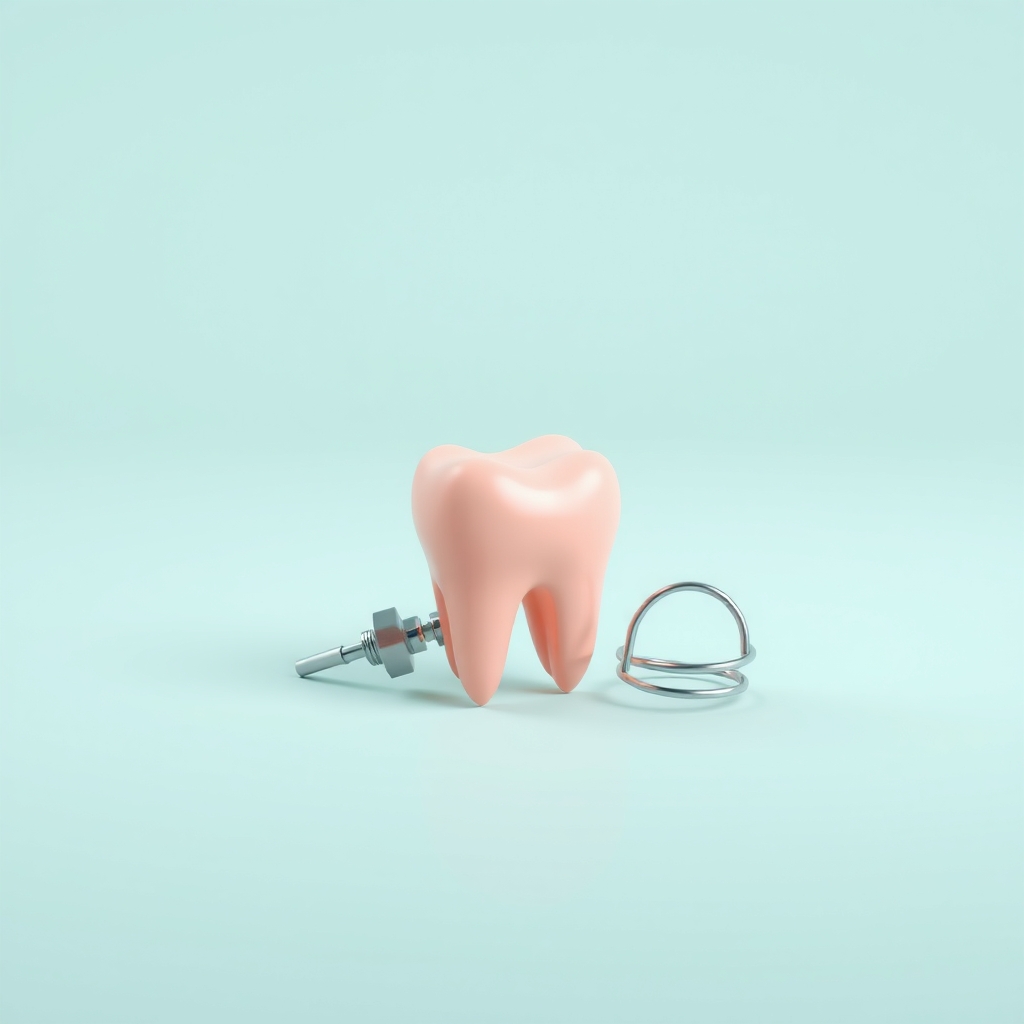
A space maintainer is a small custom-made dental appliance, usually made of metal or a combination of metal and acrylic, that holds open the gap left by a prematurely lost baby tooth. It is fitted by a pediatric or general dentist and stays in place until the permanent tooth is ready to erupt naturally.
Think of it as a placeholder. It does not replace the tooth's chewing function fully, but it stops the surrounding teeth from shifting into the empty space.
Why Premature Tooth Loss Is a Problem
Baby teeth typically fall out on their own when the permanent tooth beneath is ready to come through. When a tooth is lost too early, whether due to trauma, deep cavities, or infection, the neighbouring teeth do not know to wait. They begin to drift toward the open space almost immediately.
This drifting can cause several issues over time:
- The permanent tooth may erupt crooked, tilted, or partially blocked
- There may not be enough room left for the permanent tooth to come in at all
- The bite alignment can shift, affecting how upper and lower teeth meet
- Speech and chewing patterns can be affected in some cases
The younger the child and the earlier the tooth is lost relative to when the permanent tooth would normally arrive, the higher the risk of these complications.
How Space Maintainers Help
A space maintainer physically holds the gap open, preventing neighbouring teeth from tipping or drifting sideways. This gives the permanent tooth a clear, correctly sized path to erupt into. It is a preventive step rather than a treatment for existing crowding, so timing matters. Dentists usually recommend fitting it soon after the tooth is lost, once any injury or infection has healed.
Types of Space Maintainers
There are a few common designs, and your dentist will choose based on which tooth was lost and how many teeth are involved.
- Band and loop: Used when a single tooth is missing on one side, with a metal band on the neighbouring tooth and a loop extending across the gap
- Distal shoe: Used when a first permanent molar has not yet erupted, guiding it into the correct position
- Lingual arch: Used when multiple baby teeth are missing on the lower jaw, connecting both sides for stability
- Removable maintainers: Occasionally used for older children who can be trusted to keep them in and clean them properly
Caring for a Space Maintainer
Good oral hygiene habits matter more, not less, while wearing a space maintainer. Food particles can collect around the appliance, so regular brushing and gentle flossing around the area are important. Avoiding sticky sweets, chewing gum, and hard foods helps prevent the appliance from bending or coming loose.
Regular dental check-ups are also part of the process. Your dentist will monitor the eruption of the permanent tooth through periodic visits and X-rays, and remove the maintainer once that tooth starts coming through.
Cost Considerations in DLF Phase 4, Gurgaon
Costs depend on the type of appliance, the number of teeth involved, and whether any additional treatment such as a filling or extraction is needed first. As a general guide for families in DLF Phase 4, Gurgaon, the typical range for a single-tooth space maintainer falls between roughly INR 3,000 and INR 8,000, while more complex appliances covering multiple teeth may cost more. Your dentist can give you a clearer estimate after examining your child and reviewing an X-ray.
| Appliance Type | Used For | Typical Range (INR) |
|---|---|---|
| Band and loop | Single missing tooth | 3,000 - 6,000 |
| Distal shoe | Guiding unerupted molar | 4,500 - 8,000 |
| Lingual arch | Multiple missing teeth | 6,000 - 10,000 |
When to See a Dentist
If your child has lost a baby tooth well before the expected age, or lost one due to an accident, it is worth getting a dental check-up sooner rather than later. Early evaluation gives the best chance of fitting a space maintainer at the right time, before neighbouring teeth start to shift. Parents in DLF Phase 4, Gurgaon can visit EXL Dentists at Galleria Boulevard for an assessment and guidance tailored to their child's specific situation.
Have questions about your teeth?
EXL Dentists · Galleria Boulevard, DLF Phase IV, Sector 43
Frequently asked questions
At what age can a child get a space maintainer
Space maintainers can be placed as soon as a baby tooth is lost early, which can happen anytime from age 2 to 11 depending on the tooth. Your dentist will check if the permanent tooth is still far from erupting before recommending one.
Does the space maintainer hurt to wear
No. There may be mild soreness or a feeling of a foreign object in the mouth for a day or two after fitting. After that, most children forget it is there.
Can my child eat normally with a space maintainer
Yes, but sticky foods like toffees, chewing gum, and hard candies should be avoided since they can loosen or damage the appliance.
What happens if we skip the space maintainer
Neighbouring teeth can drift into the gap, causing the permanent tooth to come in crooked or impacted. This often leads to more complex orthodontic treatment later.
Treatment costs mentioned on this page are indicative ranges for the DLF Phase 4, Gurgaon region. Your exact cost depends on your case and will be confirmed after a clinical examination at the clinic.