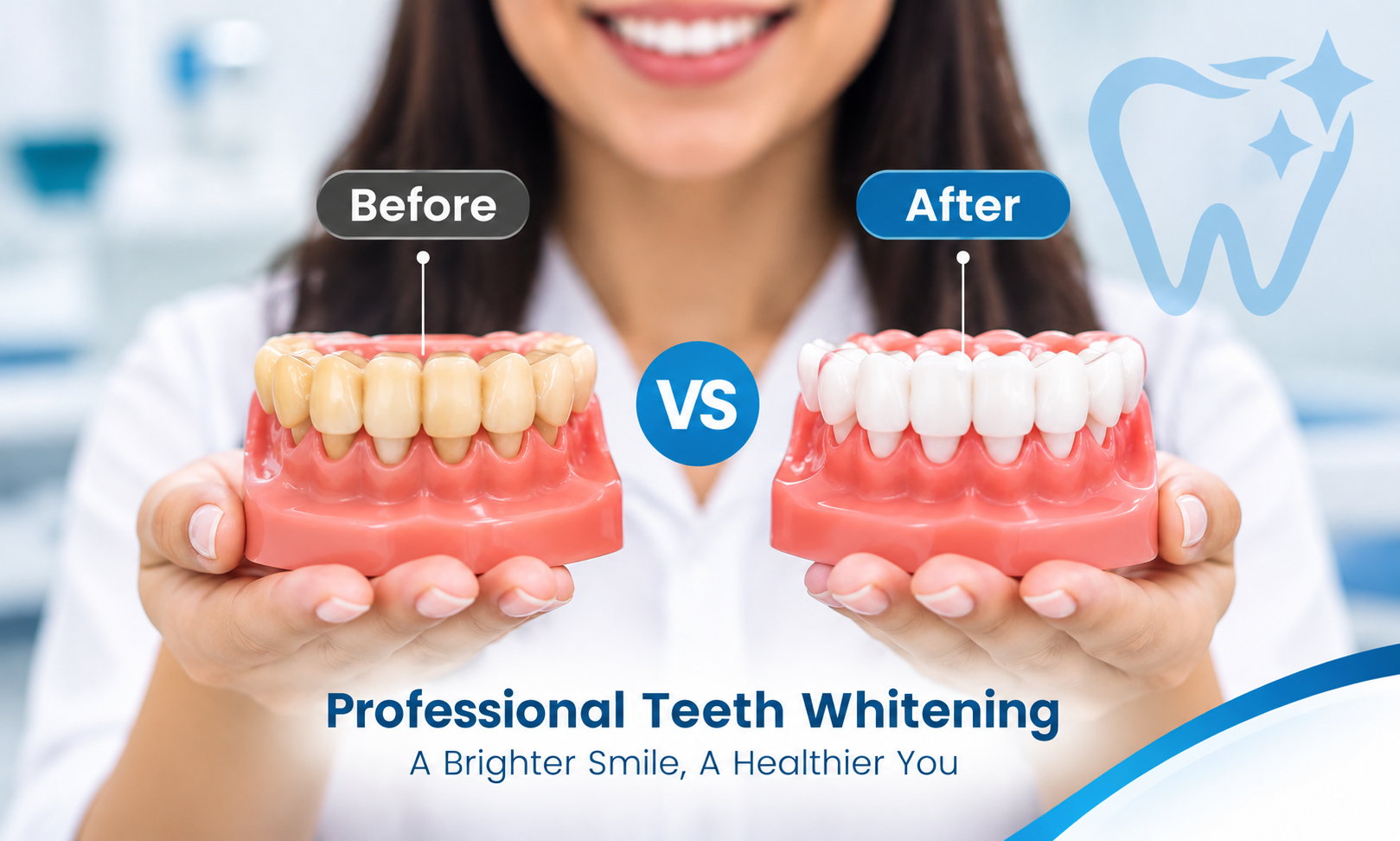
A bright, confident smile can make a big difference in the way you look and feel. However, yellow or stained teeth are extremely common. Teeth can become discoloured due to everyday habits such as drinking tea and coffee, smoking, poor oral hygiene, certain foods, or simply getting older.
The good news is that yellow teeth can often be improved. But not every whitening method works in the same way, and some popular home remedies may actually damage your teeth if used incorrectly.
So, should you choose professional teeth whitening or try a home remedy?
In this guide, we explain the common causes of yellow teeth, how professional whitening works, which home methods are safer, and when you should visit a dentist.
Why Do Teeth Become Yellow?
Teeth naturally become slightly darker with age, but external stains can make them appear noticeably yellow.
Some common causes include:
1. Tea and Coffee
Regular consumption of tea and coffee can gradually stain the outer surface of your teeth. The pigments in these beverages can attach to the enamel and cause yellow or brownish staining.
2. Smoking and Tobacco
Cigarettes and other tobacco products are major causes of tooth discolouration. Nicotine and tar can leave stubborn stains that may not disappear with normal brushing.
3. Poor Oral Hygiene
Plaque and tartar can accumulate when brushing and flossing are inconsistent. This can make teeth look dull or yellow and may also contribute to gum problems.
4. Certain Foods and Drinks
Cola, red wine, berries, sauces and other strongly coloured foods can contribute to surface staining when consumed frequently.
5. Ageing
As you get older, the enamel covering your teeth gradually becomes thinner. The naturally yellowish dentin underneath becomes more visible, making teeth appear darker.
6. Certain Medications or Dental Conditions
Some types of tooth discolouration develop from medication, excessive fluoride exposure, trauma to a tooth, or changes inside the tooth itself. These stains may not respond well to ordinary whitening products.
Is It Possible to Make Yellow Teeth White Again?
In many cases, yes.
However, the best treatment depends on why your teeth are yellow.
If the problem is primarily surface staining caused by tea, coffee or tobacco, professional cleaning and whitening may provide noticeable improvement.
If the discolouration is deeper or caused by changes within the tooth, a dentist may recommend a different cosmetic or restorative treatment.
This is why getting a dental examination before starting an aggressive whitening treatment is important.
Professional Teeth Whitening vs Home Remedies
There are many teeth-whitening tips available online. Some are relatively safe, while others can damage enamel or irritate the gums.
Let’s compare professional treatment with common home approaches.
Professional Teeth Whitening
Professional teeth whitening is performed under the supervision of a dental professional. Depending on your teeth and the type of treatment selected, whitening may be performed at the dental clinic or with dentist-provided products for use at home.
A dentist first evaluates your teeth and gums to determine whether whitening is appropriate.
Benefits of Professional Teeth Whitening
More controlled treatment:
The dentist can select the appropriate whitening method and concentration based on your dental condition.
Faster results:
In-office whitening can produce visible results more quickly than many over-the-counter options.
Better assessment:
A dentist can identify cavities, gum disease, worn enamel or other issues before whitening.
Reduced risk of misuse:
Professional guidance helps reduce the chance of overusing whitening products.
Treatment can be personalised:
Not everyone’s teeth respond to whitening in the same way. A dentist can recommend an approach based on the type and severity of your discolouration.
What Happens During Professional Teeth Whitening?
The exact process varies depending on the whitening system used.
Generally, the dentist will:
- Examine your teeth and gums.
- Discuss your expectations and dental history.
- Identify the likely cause of the discolouration.
- Protect the gums and other soft tissues.
- Apply the appropriate whitening product.
- Follow the recommended treatment time.
- Assess the result and provide aftercare instructions.
Some patients may experience temporary tooth sensitivity following whitening. Your dentist can advise you on how to manage it.
What About Teeth Whitening at Home?
There are several ways people try to whiten their teeth at home.
Some options can be useful when used correctly, while others should be avoided.
Whitening Toothpaste
Whitening toothpaste generally works by helping remove surface stains rather than dramatically changing the natural colour of the tooth.
It can be useful for maintaining a cleaner-looking smile, particularly if you regularly drink tea or coffee.
However, whitening toothpaste cannot necessarily remove deep internal discolouration.
Whitening Strips
Over-the-counter whitening strips contain bleaching ingredients designed to lighten tooth colour.
Their effectiveness depends on the product, concentration, frequency of use and the type of staining.
If you have sensitive teeth, cavities, gum problems or damaged enamel, it is better to speak with a dentist before using whitening strips.
Dentist-Provided Home Whitening
Some dentists provide customised whitening trays and whitening gel that patients can use at home according to professional instructions.
This can be a convenient option for people who prefer gradual whitening rather than an in-clinic procedure.
The key advantage is that the treatment is planned around your dental condition rather than using a generic product without an examination.
Popular Home Remedies: Do They Really Work?
The internet is full of DIY teeth-whitening suggestions. But natural does not always mean safe.
Baking Soda
Baking soda can help remove some surface stains because of its mild abrasive properties. However, aggressive or frequent scrubbing can wear down enamel.
It should not be treated as a substitute for professional whitening.
Lemon or Lemon Juice
Using lemon juice directly on teeth is generally not recommended.
Lemon is acidic, and frequent exposure to acids can contribute to enamel erosion. Once enamel is lost, it does not grow back.
Charcoal
Activated charcoal products are often marketed as natural teeth whiteners. However, evidence for their ability to safely produce meaningful whitening is limited.
Using abrasive products repeatedly may also contribute to enamel wear.
Hydrogen Peroxide
Hydrogen peroxide is used in professional whitening products at controlled concentrations. That does not mean that using household hydrogen peroxide directly on your teeth is safe.
Incorrect concentration or improper use can irritate the gums and soft tissues.
Oil Pulling
Oil pulling may be part of some people’s oral hygiene routine, but it should not be considered a proven replacement for professional teeth whitening.
Brushing with fluoride toothpaste, cleaning between your teeth and maintaining regular dental visits remain important.
Professional Whitening or Home Remedies: Which Is Better?
For people looking for a significant improvement in tooth colour, professional teeth whitening is generally the more controlled approach.
| Factor | Professional Whitening | Home Remedies |
| Dentist supervision | Yes | Usually no |
| Treatment personalised | Yes | Usually no |
| Speed of results | Often faster | Usually gradual |
| Suitable for deep stains | Depends on cause | Limited |
| Risk of incorrect use | Lower with professional guidance | Can be higher |
| Best for | Controlled cosmetic whitening | Basic stain maintenance |
The right choice ultimately depends on the cause of your discolouration and the condition of your teeth.
When Should You See a Dentist for Yellow Teeth?
You should consider a dental examination if:
- Your teeth have suddenly changed colour.
- One tooth is significantly darker than the others.
- You have tooth pain or sensitivity.
- Your gums bleed frequently.
- You have visible tartar.
- You have cavities or damaged teeth.
- Whitening products are causing significant irritation.
- Your teeth remain yellow despite regular brushing.
- You want noticeable whitening before an important event.
A dentist can determine whether the colour is caused by surface stains, natural tooth colour, enamel changes or another dental problem.
How to Prevent Teeth from Becoming Yellow Again
Whitening is not a permanent way to prevent future staining. Your daily habits have a major impact on how long your smile stays bright.
Brush Twice a Day
Brush your teeth twice a day using fluoride toothpaste and a soft-bristled toothbrush.
Clean Between Your Teeth
Floss or use another dentist-recommended interdental cleaning method to remove plaque from areas your toothbrush cannot reach.
Limit Staining Drinks
If you frequently consume tea, coffee or cola, reducing your intake can help minimise future staining.
Rinse After Tea or Coffee
If brushing immediately is not practical, rinsing your mouth with water after consuming staining beverages can help reduce prolonged exposure.
Avoid Tobacco
Quitting smoking and tobacco products can benefit both your oral health and the appearance of your teeth.
Visit Your Dentist Regularly
Routine dental examinations and professional cleaning can help control plaque, tartar and surface staining.
How Long Does Teeth Whitening Last?
The duration of whitening results varies from person to person.
Your diet, oral hygiene, tobacco use, natural tooth colour and exposure to staining foods and drinks can all affect how long the results remain noticeable.
Someone who drinks several cups of coffee every day may experience staining sooner than someone who rarely consumes staining beverages.
Maintaining good oral hygiene and following your dentist’s aftercare recommendations can help extend the results.
Can Everyone Get Teeth Whitening?
Not everyone is an ideal candidate for whitening.
For example, whitening may not be appropriate without treating existing dental problems such as cavities or gum disease.
Also, whitening treatments generally affect natural tooth structure. Dental crowns, veneers, bridges and some other restorations may not change colour in the same way as natural teeth.
If you have existing dental restorations, speak with your dentist before whitening so you can understand what result is realistically achievable.
Teeth Whitening in Gurgaon
If you are looking for teeth whitening in Gurgaon, a dental consultation is a good first step before choosing a treatment.
At EXL Dentists