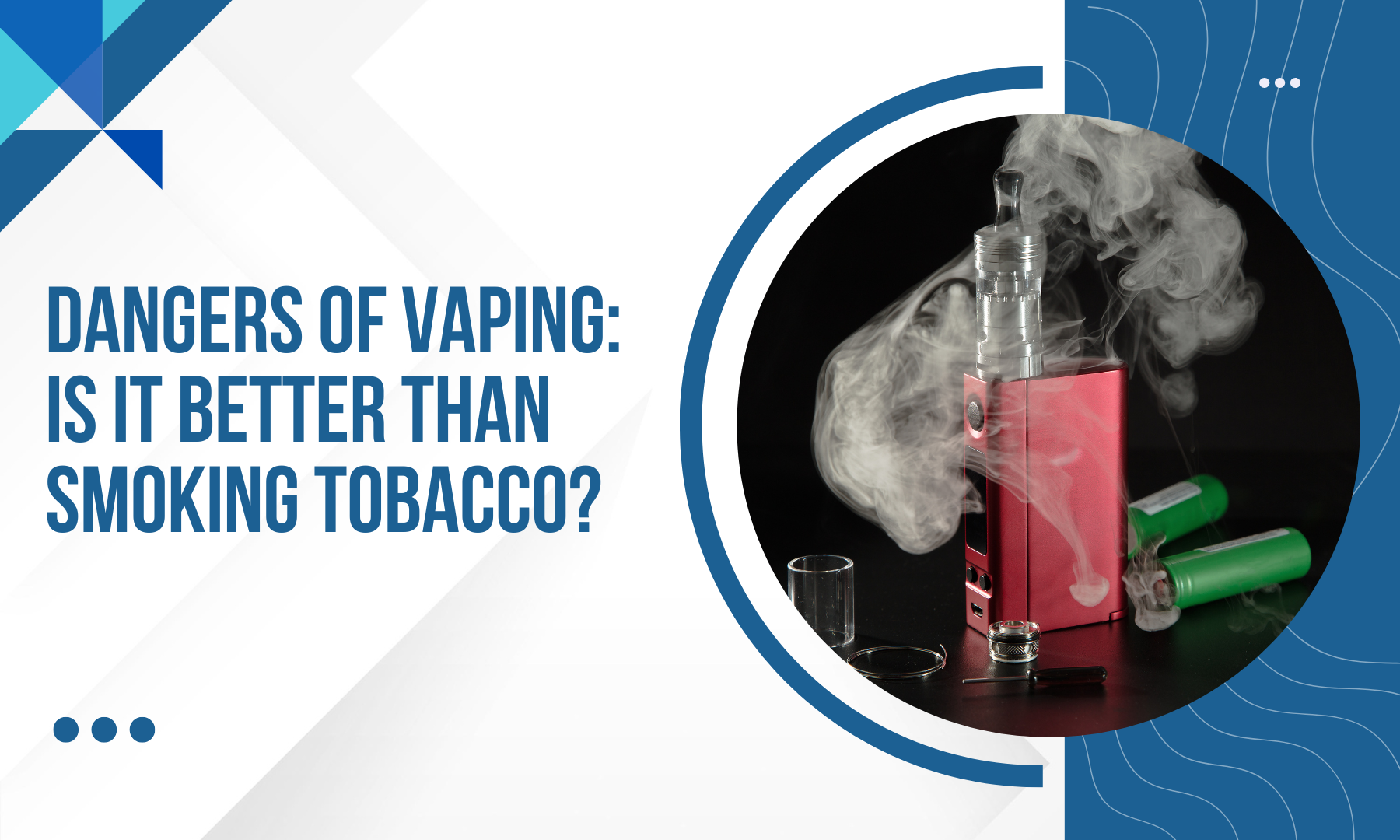
Firstly, let’s get to know what Is Vaping?
Vaping involves inhaling an aerosol (commonly called vapor) produced by an electronic cigarette (e-cigarette) or similar device. These vapors often contain nicotine, flavorings, and other chemicals — many of which can be harmful when inhaled.
It’s marketed sometimes as a “safer option” to traditional smoking and mostly appeals to Gen Z, making vaping popular among young adults. However, recent studies reveal that vaping surely has risks involved, especially for your mouth and overall health.
Whether smoking or vaping, it’s the nicotine and other chemicals causing harm. Let’s see some common side effects in the oral environment.
The Dangers of Vaping for Your Oral Health
1. Dry Mouth (Xerostomia): Vaping reduces saliva production, leading to dry mouth. A dry oral environment increases the risk of cavities, gum disease, and bad breath.
2. Gum Inflammation and Disease: Nicotine — present in most vaping products — restricts blood flow to the gums. This can mask signs of gum disease while causing tissue damage. Over time, this may lead to periodontitis and tooth loss.
3. Enamel Damage: The acidic ingredients and chemicals in vaping liquids can weaken enamel, making teeth more vulnerable to decay and sensitivity.
4. Oral Cancer Risk: Early evidence suggests chemicals in e-cigarettes (like formaldehyde and acrolein) may increase the risk of oral cancer.
5. Slow Healing After Dental Procedures: Nicotine affects the body’s ability to heal. Vapers often experience delayed healing after dental surgeries, implants, or extractions.
So, Coming back to the same question, Is Vaping Better Than Smoking?
The honest answer: Neither is good for you. While vaping may expose users to fewer toxic substances than smoking traditional cigarettes, it still poses significant health risks, particularly for the mouth.
Here’s a quick comparison:
| Aspect | Smoking Tobacco | Vaping |
|---|---|---|
| Nicotine addiction | High | High |
| Cancer-causing agents | Many | Fewer, but still present |
| Impact on oral health | Severe (gum disease, oral cancer, tooth loss) | Significant (gum disease, enamel damage, possible cancer risk) |
| Healing after dental work | Poor | Poor |
| Breath odor | Strong and unpleasant | Masked by flavors |
While some may view vaping as the “lesser evil,” it’s important to recognize that “less harmful” does not mean “safe.”
What Should You Do?
If you currently smoke or vape, quitting is the best step for your oral and overall health. At Dental Clinic, we guide patients on smoking cessation and protecting dental health.
- Maintain regular dental checkups.
- Practice excellent oral hygiene.
- Seek professional help to quit smoking or vaping.
Final Thoughts
At EXL Dentists Clinic in DLF 4, Gurgaon, we believe prevention is better than cure. Vaping may have started as a “safer” alternative, but it carries serious oral health risks. Protect your smile — choose health over habits.
Frequently Asked Questions About Vaping and Smoking Tobacco
Is vaping bad for your teeth and gums?
Yes, vaping can cause dry mouth, gum disease, enamel damage, and slow healing after dental procedures.
Does vaping cause oral cancer?
Research suggests chemicals in vape aerosols may increase the risk of oral cancer, though studies are ongoing.
Is vaping less harmful than smoking for oral health?
While it may have fewer toxins, vaping still significantly harms oral tissues and should not be considered safe.
Can vaping affect healing after dental treatments?
Yes, nicotine in vapes restricts blood flow and slows down healing after surgeries, implants, and extractions.