Root Canal Overview
A root canal is a dental procedure that many people dread, but it’s often the best option to save a tooth that’s been damaged or infected. It’s essential to understand the procedure, potential symptoms, and recovery process so that you can make an informed decision. If you’ve been searching for terms like “root canal procedure,” “how long does a root canal take,” or “how to recover after a root canal,” this guide will provide answers to all your questions.
What is a Root Canal?
A root canal is a treatment used to repair and save a tooth that is severely decayed or infected. Inside each tooth is pulp, a soft substance made up of blood vessels, nerves, and connective tissue. When the pulp becomes infected due to deep decay or injury, the infection can spread to the surrounding bone and tissues, causing severe pain and discomfort. A root canal procedure removes this infected pulp, disinfects the tooth, and seals it to prevent further infection.
Causes for a Root Canal
Tooth decay, trauma, or repeated dental procedures on the same tooth are the primary causes that lead to the need for a root canal. Here are some common reasons:
- Deep Tooth Decay: When cavities are left untreated, they can reach the pulp, causing infection.
- Injury or Trauma: A cracked or chipped tooth can expose the pulp, leading to an infection.
- Repeated Dental Work: Multiple fillings or procedures can damage the pulp over time.
- Gum Disease: In advanced stages, gum disease can cause infection in the pulp.
Root Canal Symptoms
Here are the most common signs that indicate a root canal may be needed:
- Severe Tooth Pain: Consistent pain or sensitivity to pressure, chewing, or touch.
- Swollen or Tender Gums: Infection spreading to gums may cause redness or tenderness.
- Darkened Tooth: Tooth appears darker due to internal damage.
- Pain When Eating or Touching: Sharp pain when chewing or pressing the tooth.
- Pimple on Gums: A pimple-like bump near the tooth may indicate an abscess.
Root Canal Procedure
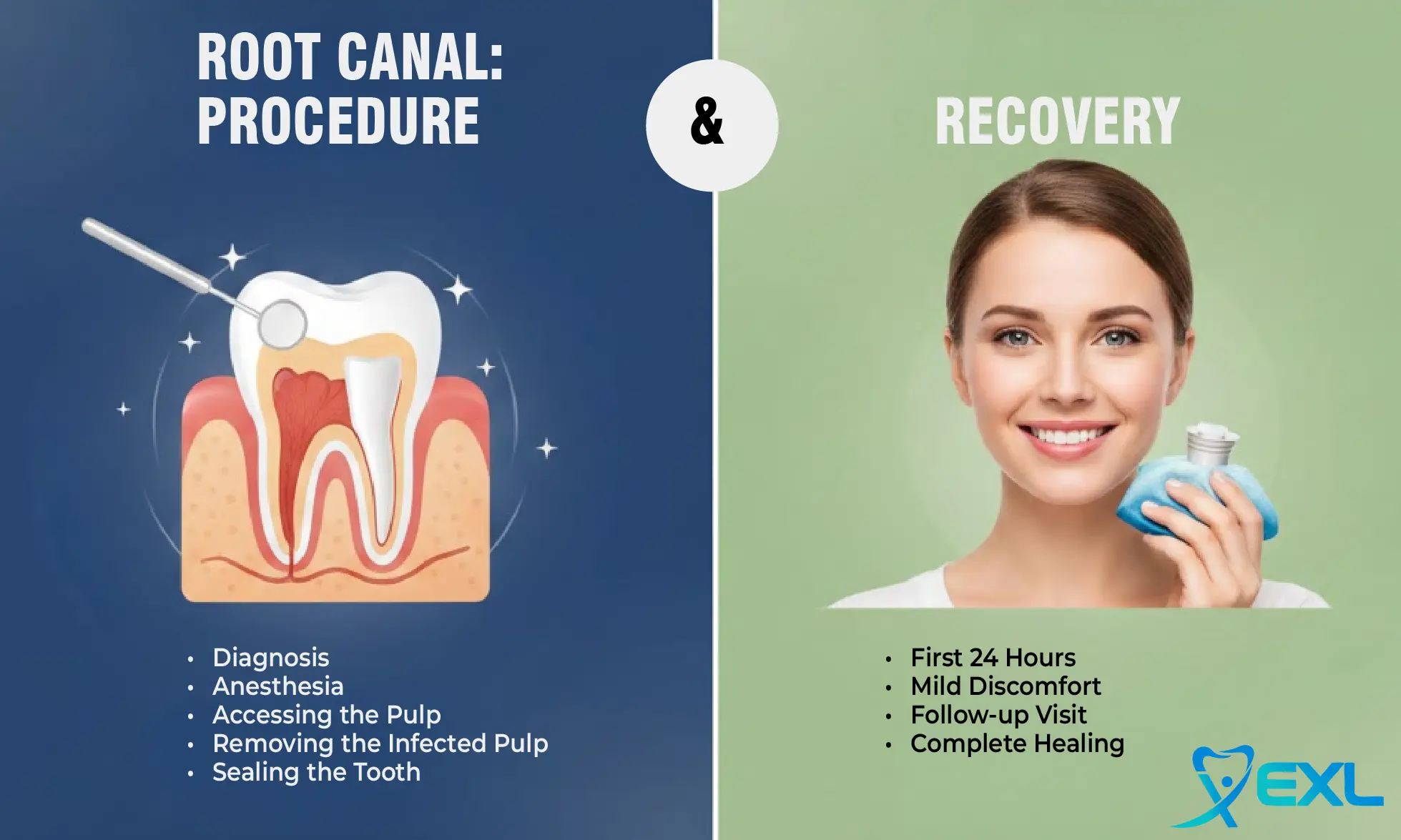
The procedure is typically completed in one or two visits, depending on infection severity. Steps include:
Diagnosis
The dentist takes X-rays to assess damage and infection.
Anesthesia
Local anesthesia numbs the area for comfort.
Accessing the Pulp
A small hole is created in the tooth to access the pulp chamber.
Removing the Infected Pulp
The pulp is removed and canals are cleaned to eliminate infection.
Sealing the Tooth
Canals are sealed with a rubber-like material to prevent reinfection.
Restoring the Tooth
A crown is often placed to restore shape and function.
Pain After a Root Canal
The procedure itself is generally painless due to anesthesia. Mild discomfort may occur post-procedure and is normal for a few days. Severe pain may indicate complications, requiring a dentist consultation.
Root Canal Recovery Time
Recovery varies depending on procedure complexity. Mild discomfort usually lasts 1–3 days. Expectations include:
- First 24 Hours: Avoid chewing on the treated tooth; stick to soft foods.
- Mild Discomfort: Mild tenderness is normal; OTC pain relievers can help.
- Follow-up Visit: Ensure healing and check for infection.
- Complete Healing: Full recovery may take several weeks; follow dentist instructions.
Root Canal Aftercare Tips
- Take Pain Relievers as Prescribed: Manage discomfort as instructed.
- Avoid Chewing on the Treated Tooth: Until fully restored with crown or filling.
- Brush and Floss Gently: Clean area without aggressive brushing near the tooth.
- Follow Up with Your Dentist: Ensure proper healing.
- Watch for Complications: Seek attention if severe pain, swelling, or fever occurs.
Root Canal Complications
- Infection: Improper sealing or cleaning may lead to infection.
- Tooth Fracture: Root canal teeth may become brittle, needing a crown.
- Persistent Pain: Pain beyond expected healing may indicate procedure issues.
Conclusion
A root canal effectively treats infected teeth, relieves pain, and prevents tooth loss. Proper aftercare and follow-ups ensure smooth recovery. Maintaining oral hygiene and regular visits to a general dentist help prevent complications.
If you’re experiencing tooth pain, abscess, or other symptoms, EXL Dentists is here to help. Our experienced team provides high-quality treatments as part of general dentistry. Book an appointment today!
Frequently Asked Questions About Root Canal
- How long does it hurt after a root canal? Pain typically lasts a few days to a week.
- Why do I still have an abscess after a root canal? It may occur if infection wasn’t fully removed or tooth wasn’t sealed properly. Follow up with your dentist.
- Is it normal to have severe pain after a root canal? Severe pain is uncommon; contact your dentist if it occurs.
- Can you brush your teeth after a root canal? Yes, but brush gently around the treated tooth, especially if temporary filling is present.